Writer : Ferryal Sasmitha Larasati P N (Meteorology, 2023)
Editor : Mely Anggrini (Meteorology, 2022)
Translator : Aisyah Nurdiva Dewary Priatna (Meteorology, 2024)
MAJALAYA, itb.ac.id – In an effort to foster community self-reliance in facing hydrometeorological disasters, Zephyrus—a semi-autonomous body of the ITB Meteorology Student Association “Atmosphaira”—organized a series of community service activities focused on surveying and providing training for river and weather monitoring equipment in Talun Village, Majalaya District, Bandung Regency. The activities took place over two days: Saturday, May 24, 2025, for the site survey, and Saturday, May 31, 2025, for instrument assembly training.
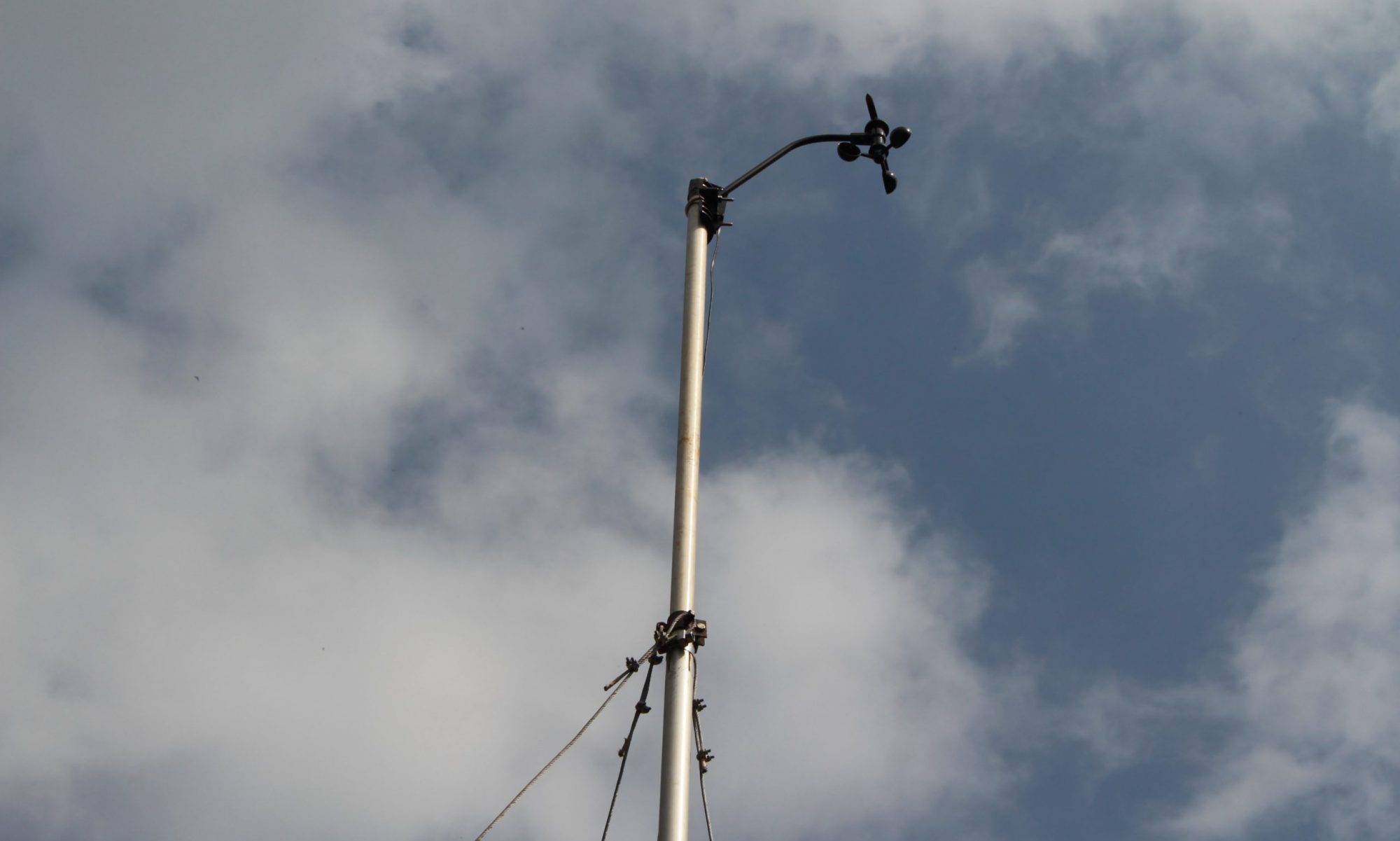
This initiative embodies the spirit of promoting appropriate technology and disaster education, particularly regarding flood risks in vulnerable areas like Majalaya. Employing a scientific, practical, and participatory approach, the activity aimed to enhance local community preparedness and engagement regarding hydrometeorological disasters through the use of monitoring equipment that can be assembled and maintained independently. This equipment, known as Z-ONA (Zephyrus-Observasi Nadir Air), consists of an AWLR (Automatic Water Level Recorder) and an ARR (Automatic Rainfall Recorder).
The series of activities began on May 24, 2025, with a site survey conducted by the Zephyrus team to identify potential locations for installing the equipment, covering river and pond areas in Kampung Talun. The assessment considered technical, safety, and accessibility factors to ensure the devices would function optimally and remain easy for residents to calibrate.
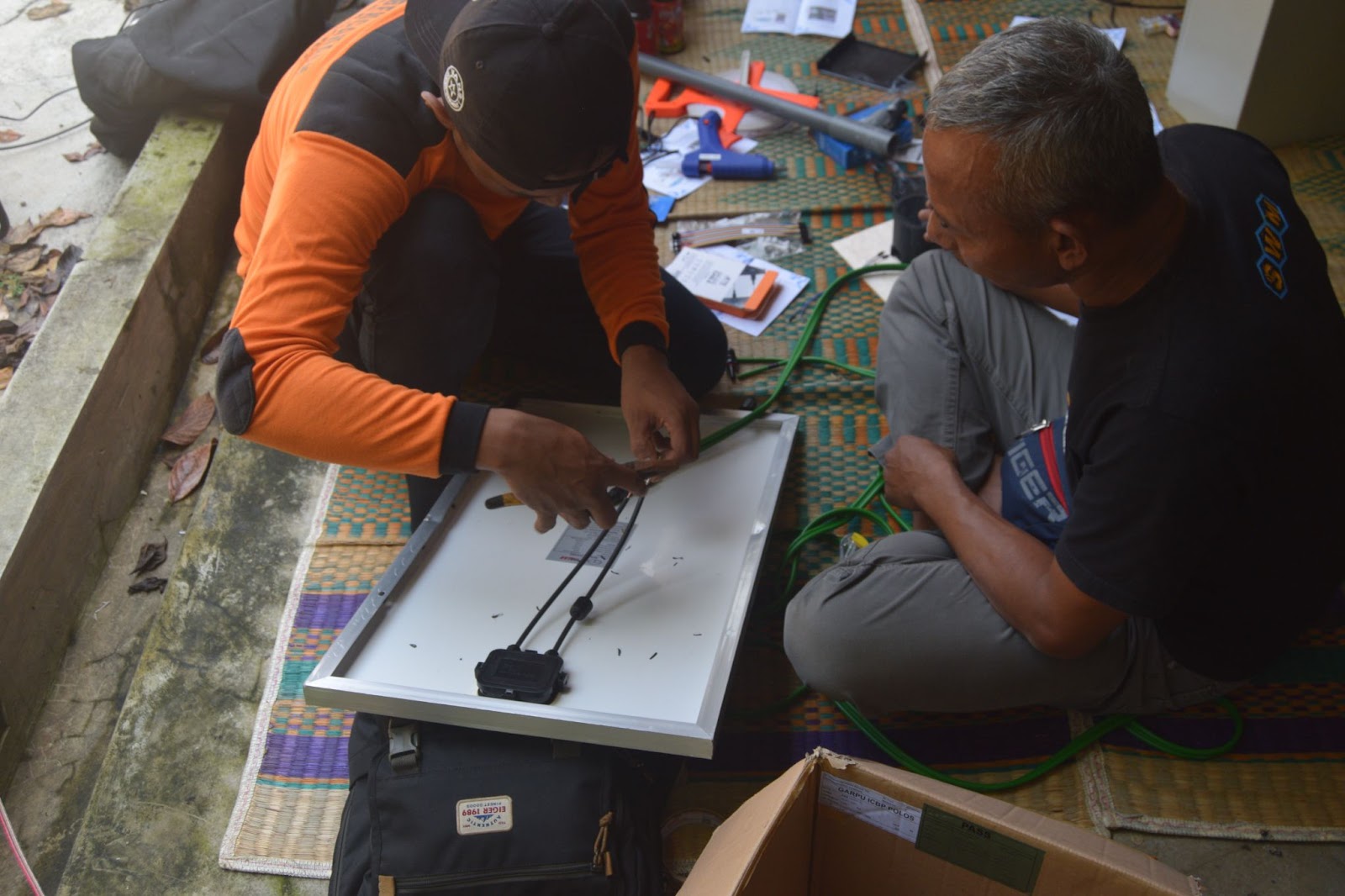
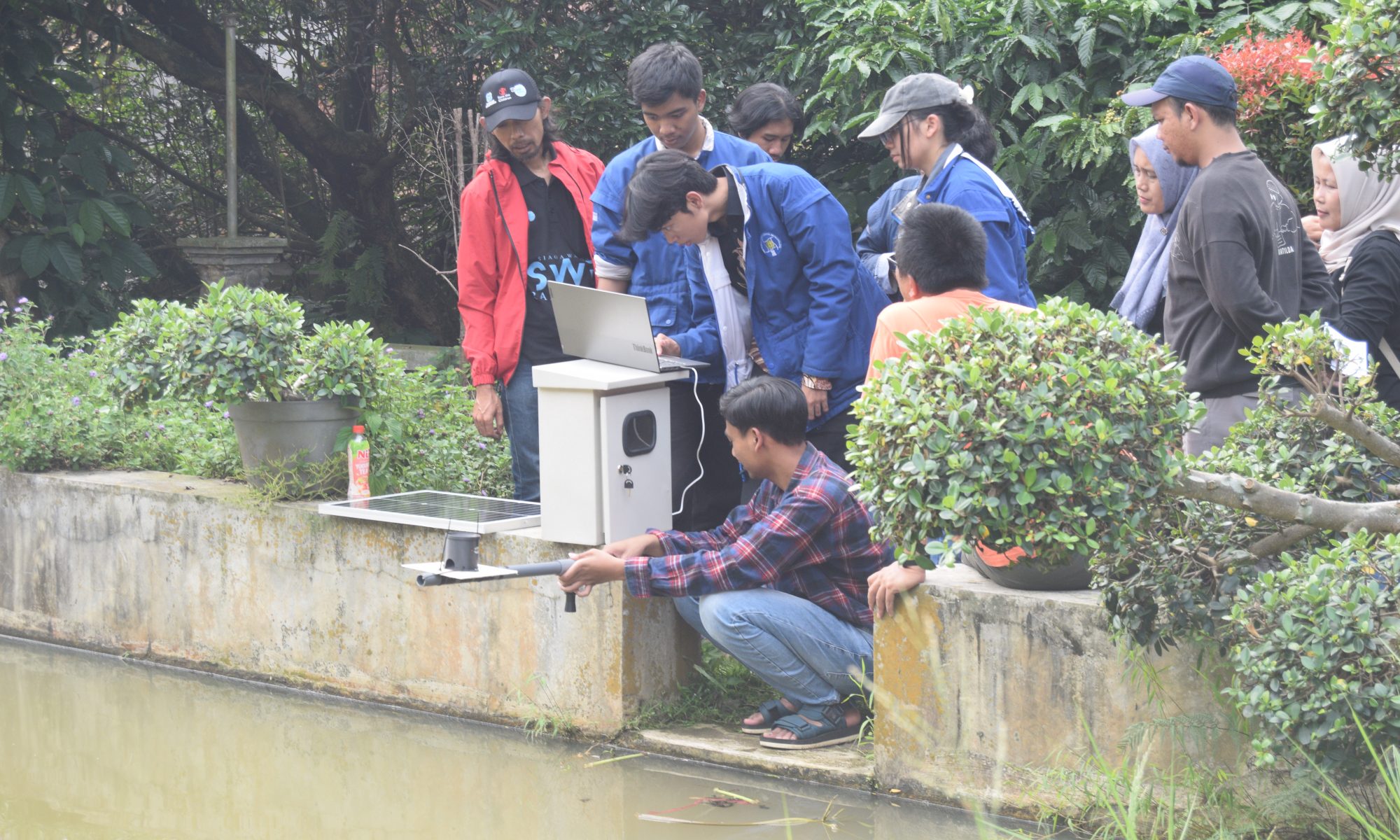
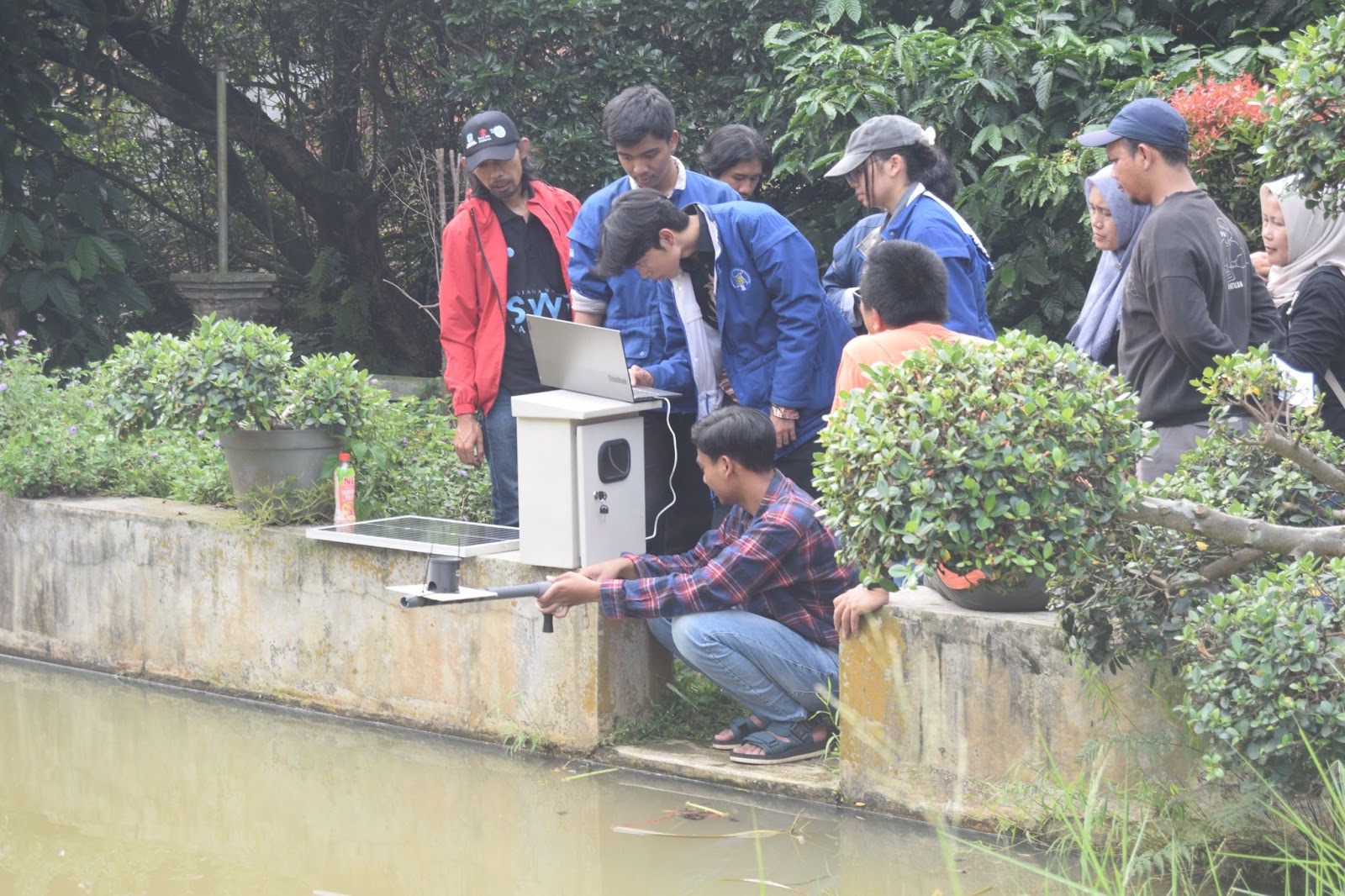
During the activity, participants were divided into three groups to assemble the device firsthand. The process involved assembling the control box, wiring connections, programming the microcontroller board, and installing the sensor components.
Afterward, participants connected the device to a laptop and performed calibration in a pond by measuring the distance from the sensor to the bottom using a tape measure. The calibration values were then entered into the system to ensure accurate readings.
“Calibration is crucial; without it, the data could be skewed. We want data that is reliable and useful,” explained Emilio.
At the conclusion of the activity, participants gained insight into how the collected data could be displayed as easy-to-understand visual graphs. The hope is that residents and volunteers will be able to continuously monitor their local environmental conditions, particularly in preparation for the rainy season.
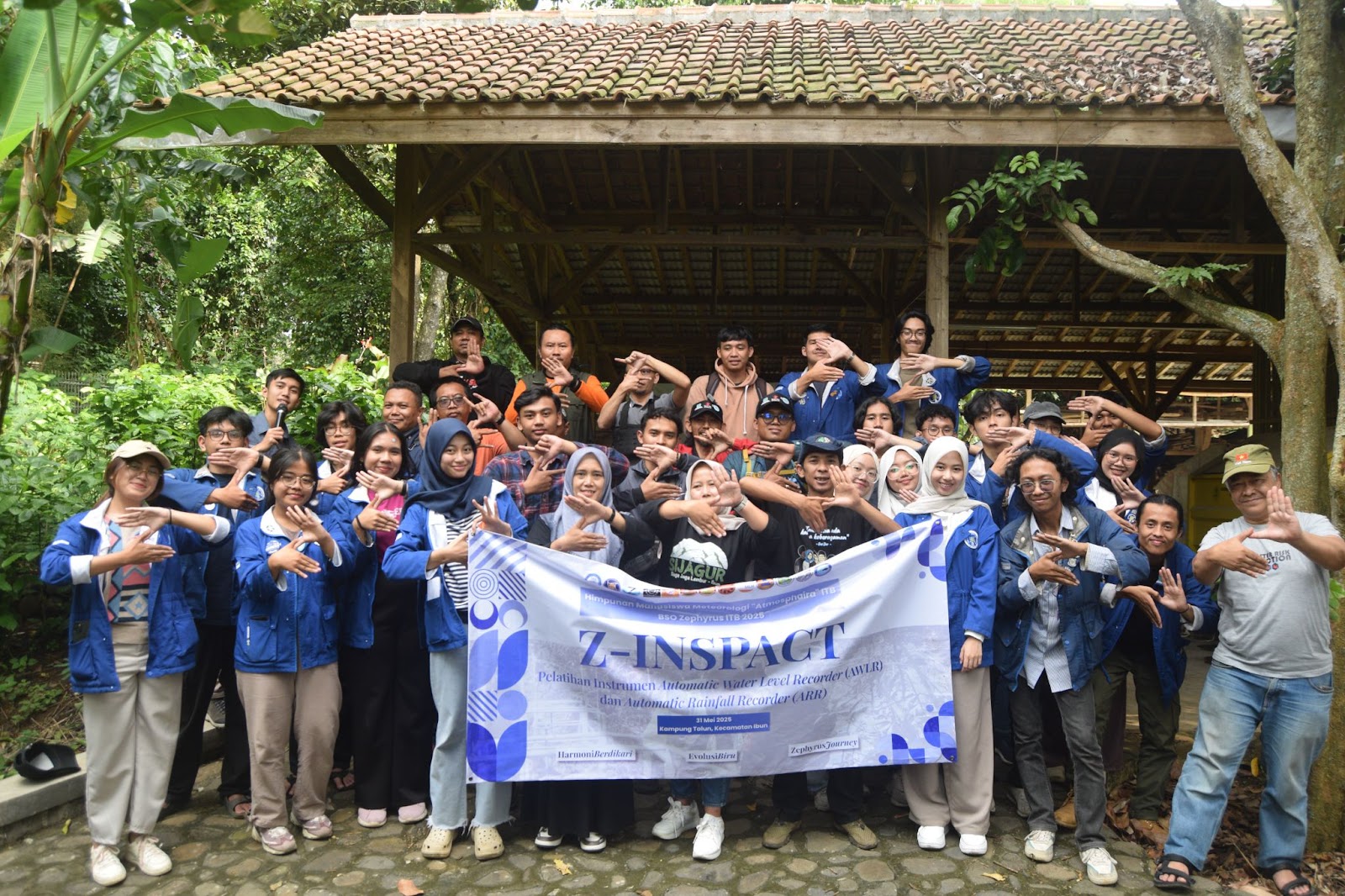
Through this initiative, Zephyrus hopes that the community will not merely be passive recipients of information but will also become data producers and key players in disaster risk mitigation. “Once they understand the concept, the hope is that participants can replicate it and establish new ‘Z-ONAs’ in their own neighborhoods, thereby extending the benefits,” stated Emilio, Head of the Research and Development Division.
Driven by collaboration among students, community groups, and local residents, this initiative demonstrates that technology-based solutions need not be expensive or complex. Self-reliance in disaster mitigation can begin with local initiative, and from a village like Talun, that spirit can grow to inspire other regions.