
By : Lutfiah Nur Rohmah Salaamah
Editor : Muhaji Sahnita Putri
Translator : Aisyah Nurdiva Dewary Priatna
Friday, November 17th 2023
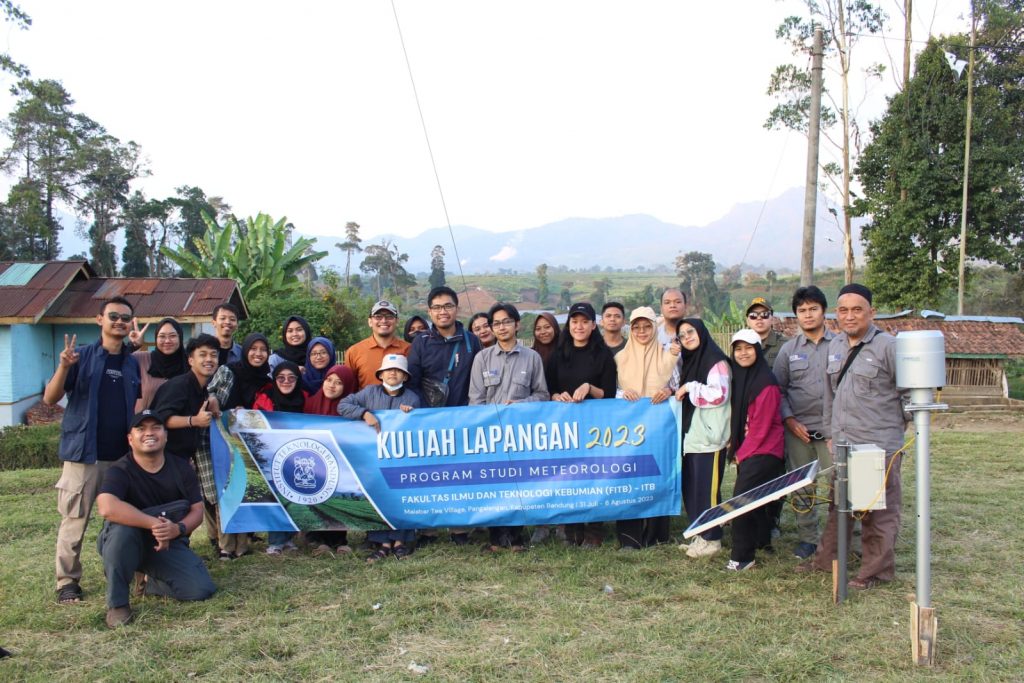
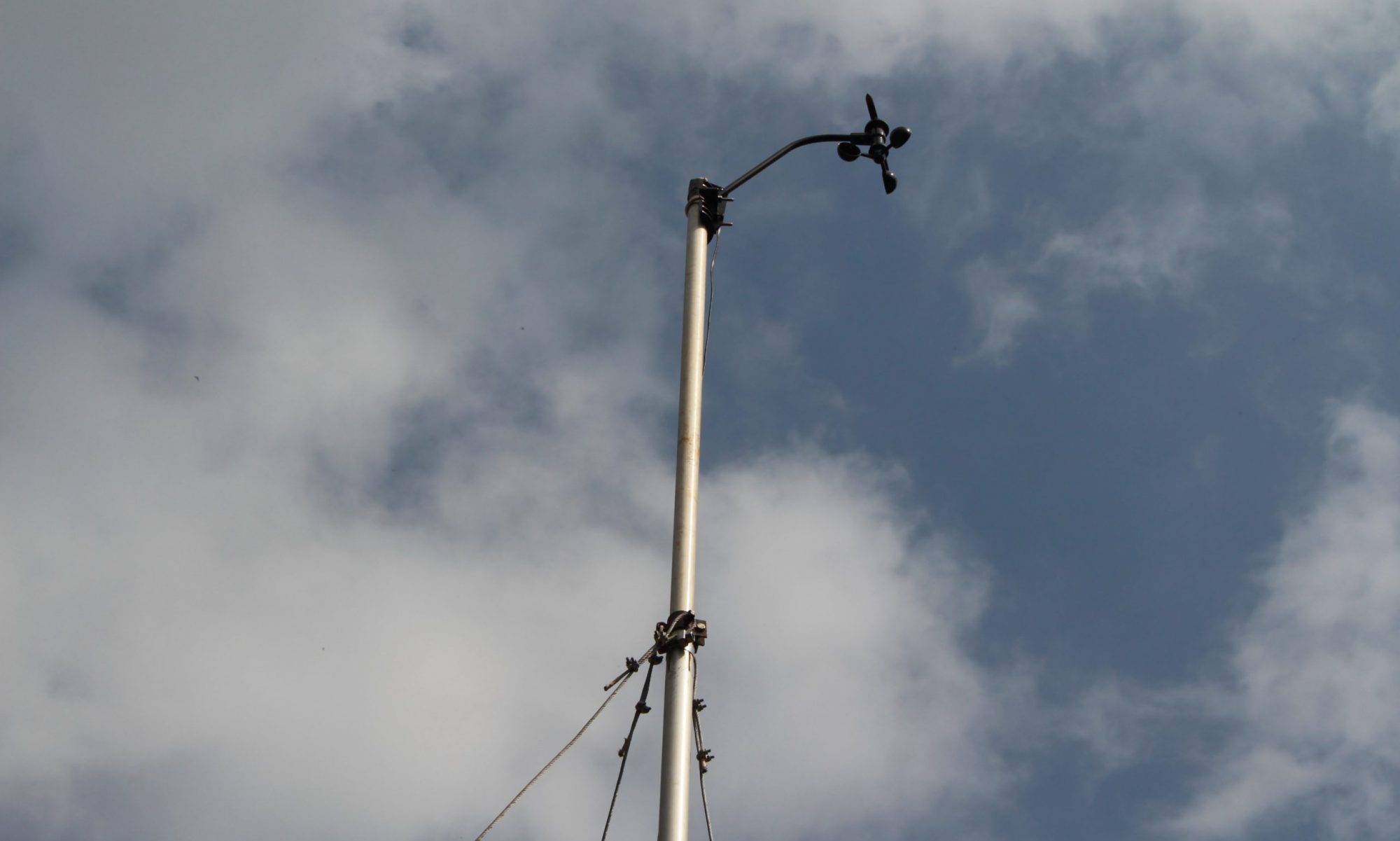
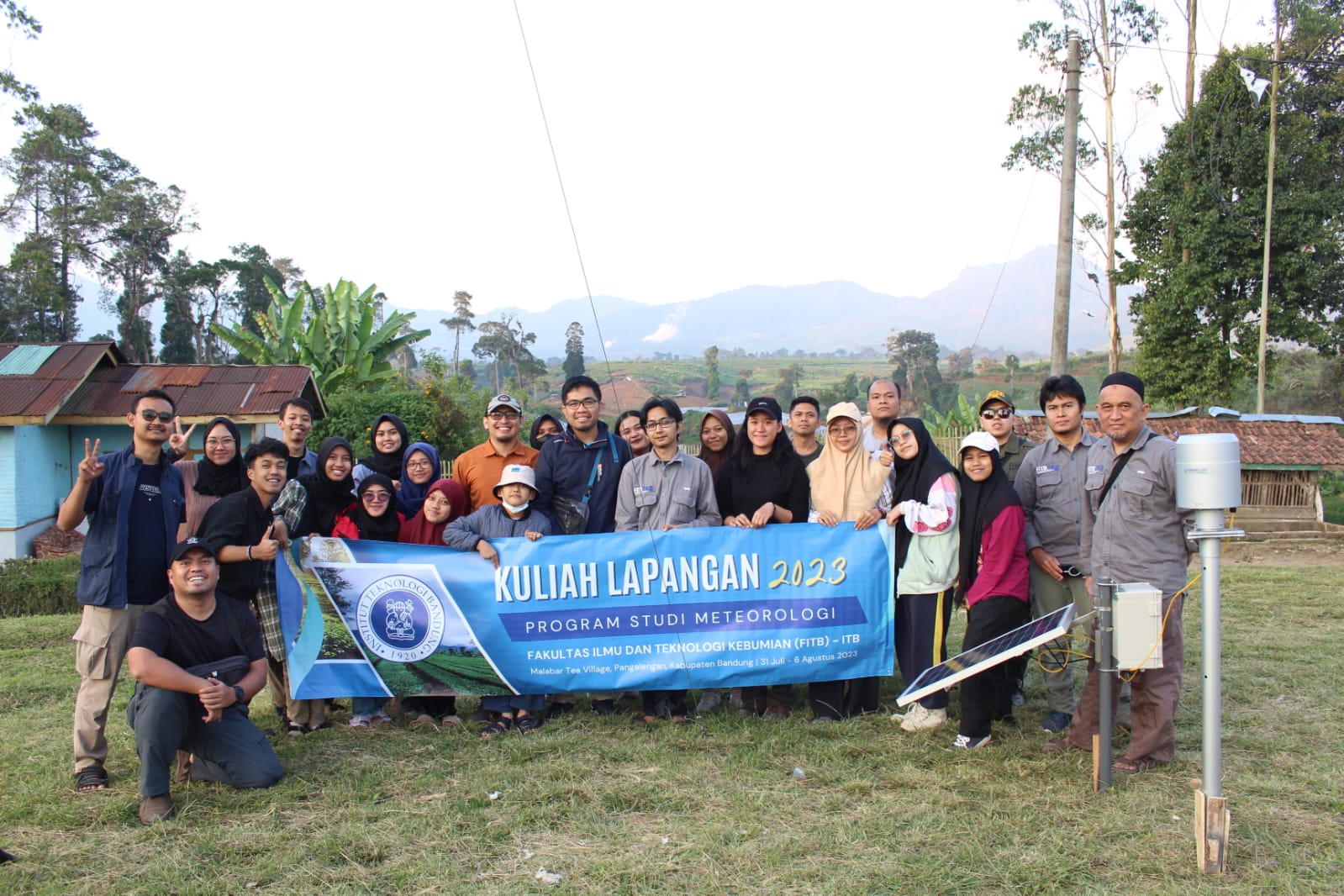
BANDUNG, meteo.itb.ac.id — ITB Meteorology students gained valuable experience during a one-week field course (ME3098) held from July 31 to August 6, 2023, in Pangalengan, Bandung Regency, West Java. The primary focus of this field course was the installation of Automatic Weather Stations (AWS) and direct weather observation. According to student Ni Wayan Yamuna Kanika, three units of the AWS—an advanced instrument used to measure various weather parameters—were installed at three distinct locations: Site 0 at Malabar Tea Village, Site 1 at Kampung Cinchona, and Site 2 at Margamulya. Initially, the students were divided into three groups corresponding to the number of sites, with each group responsible for observations at their assigned location. However, on the second day, the observation groups were rotated to ensure that every group had the opportunity to observe weather conditions at all the sites.


In addition to conducting observations, students also analyze daily weather conditions by processing data obtained from weather monitoring instruments. Data from the Automatic Weather Station (AWS) is processed to determine daily weather conditions at the observation site and to identify potential weather phenomena. Phenomena such as mountain and valley winds, katabatic winds, and anabatic winds are key aspects of weather observation in Pangalengan.
Mountain and valley winds are weather phenomena linked to topography. Mountain winds move from lowlands toward highlands or mountains due to more rapid heating in the lowlands. Conversely, valley winds move from highlands or mountains toward lowlands at night due to faster cooling in those areas. These phenomena can influence local air temperature and humidity. Meanwhile, katabatic and anabatic winds are types of winds associated with mountainous terrain. Katabatic winds occur when cold, dense air flows downslope from mountains to lowlands. Anabatic winds, conversely, occur when warm air flows from lowlands toward the mountains. Both phenomena can significantly impact air temperature and humidity in the observed area.
Observation results indicate that synoptic-scale phenomena do not significantly affect changes in weather parameters in this region. Instead, the diverse and strategic topography of Pangalengan—comprising mountains, hills, and valleys—plays a pivotal role in the weather observations conducted there.


The wind rose example above—covering August 3–4, 2023—shows that from 18:00 WIB to 06:00 WIB the following day, the prevailing wind came from the southeast. This was driven by katabatic winds, resulting from the higher elevation of the terrain southeast of the observation site. Conversely, between 06:01 WIB and 18:00 WIB, the dominant winds originated from the northwest and north due to anabatic winds, influenced by the lower elevation of the terrain in those directions.
A field trip to Pangalengan, Bandung Regency, undertaken by ITB Meteorology students, provided valuable insights into the role of topography in shaping local weather patterns. Through weather observation and analysis—covering phenomena such as mountain winds, valley winds, katabatic winds, and anabatic winds—the students deepened their understanding of the relationship between topography and weather variations. This experience not only enhanced their practical skills but also fostered a passion for meteorological research and strengthened the foundation for more accurate weather forecasting in regions with similar topographical characteristics.