
Writer : Field Trip Participants, 2024
Editor : Mely Anggrini (Meteorology, 2022)
Translator : Aisyah Nurdiva Dewary Priatna (Meteorology, 2024)

Do you know what causes the wind to move? Have you ever felt the wind while visiting the beach? What kind of wind was it?
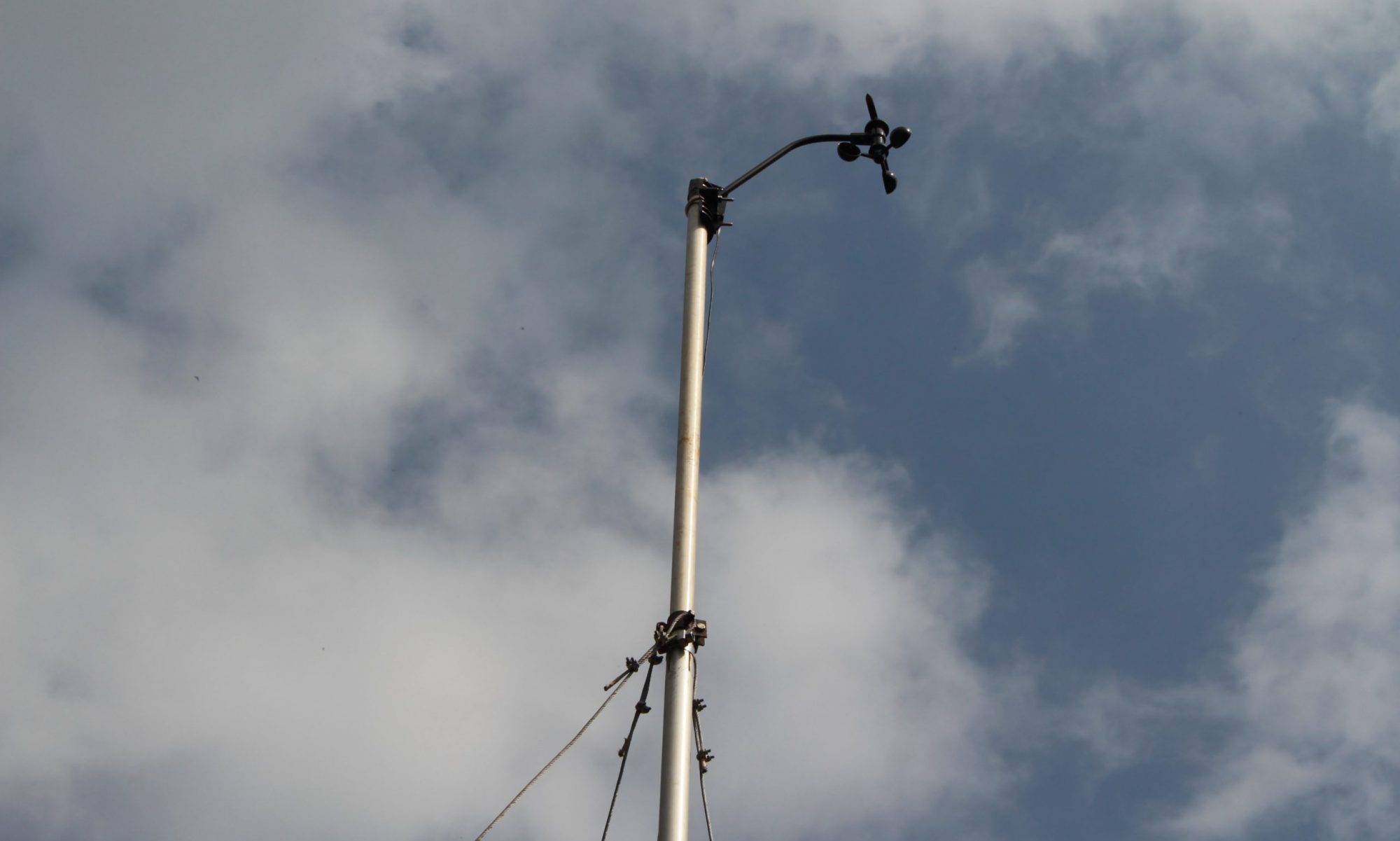
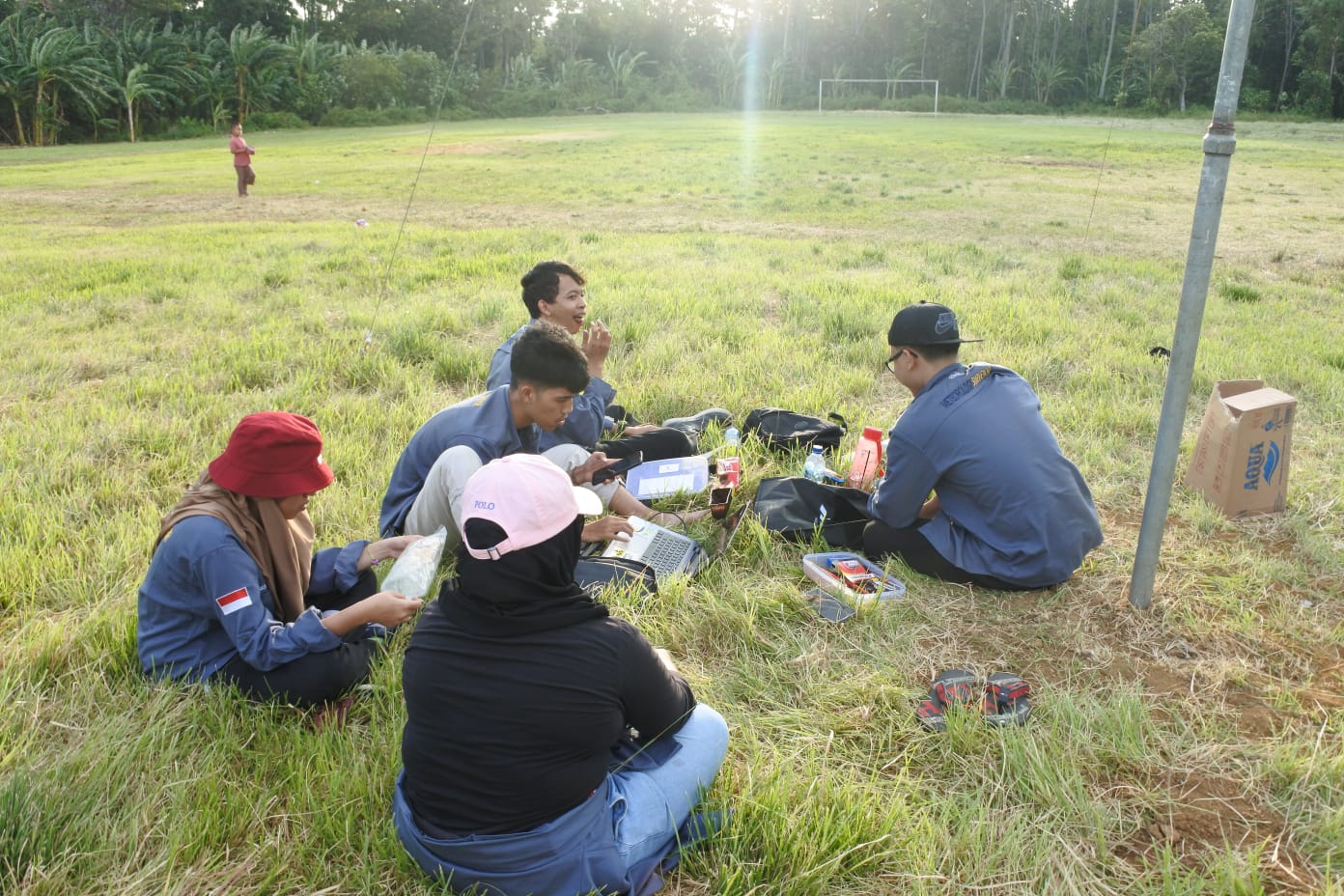
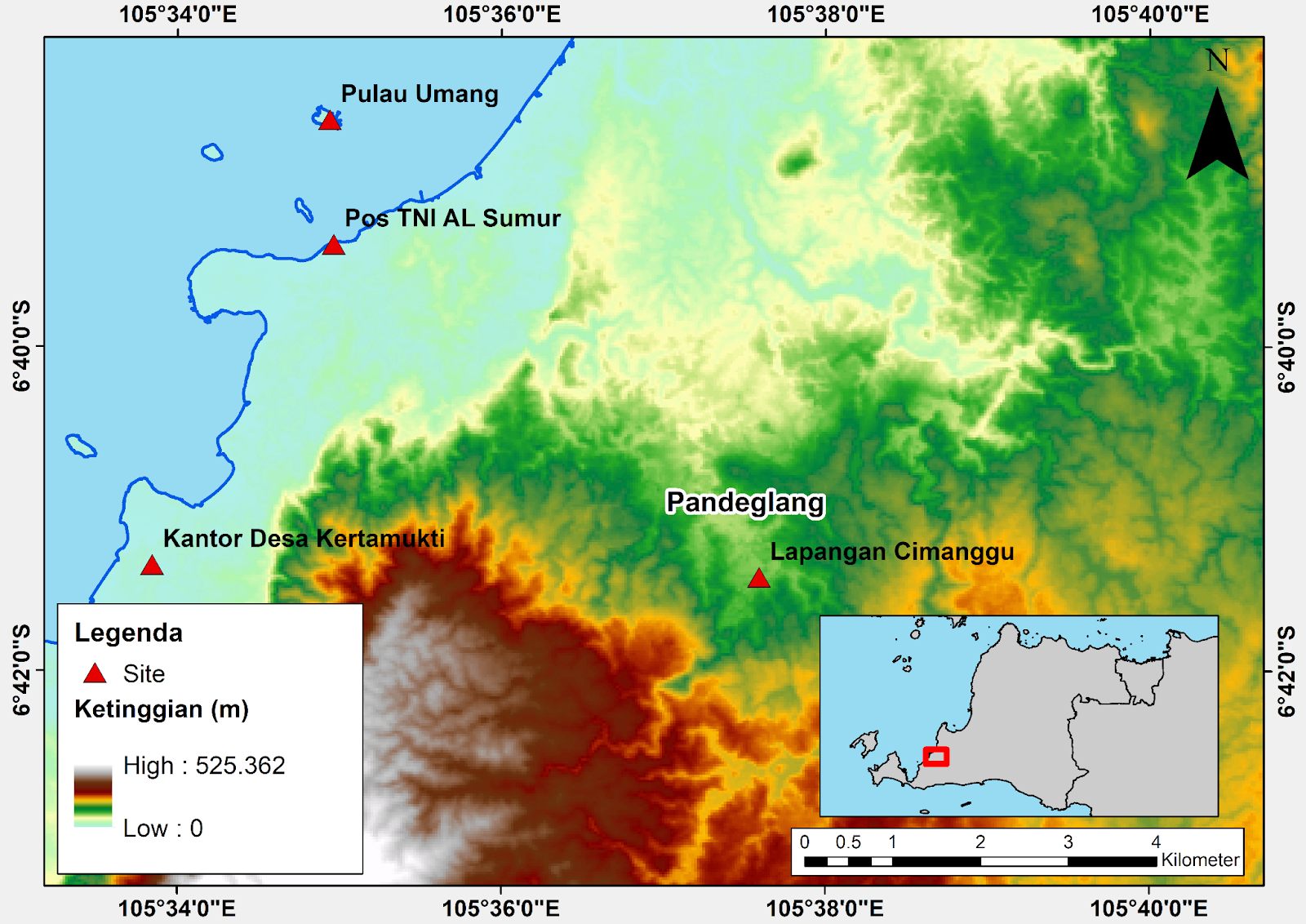
BANDUNG, meteo.itb.ac.id – Recently, the ITB Meteorology Study Program conducted a field course from August 3 to 10, 2024, in Sumur, Pandeglang Regency, Banten. This field course aimed to train students in operating meteorological field observation instruments and analyzing wind conditions in the waters off Tanjung Lesung. Data were collected from observations at four sites distributed across the study area. These four locations were situated close to the coastline, with the expectation of capturing the land and sea breeze phenomena present at the observation sites.
So, what exactly are land breezes and sea breezes?
Land and sea breezes are local wind systems that follow different patterns during the day and night. Both occur due to differences in how the sea surface and the coastal land heat up.
Why does this difference in heating occur?
It is important to understand that the ocean has a much higher heat capacity than land. During the day, the ocean heats up more slowly than the land, resulting in higher land temperatures. Pressure is inversely related to temperature; the high temperature on land creates a low-pressure area, while the ocean experiences higher pressure. This pressure difference causes air to flow from the sea to the land—a phenomenon known as a sea breeze. Conversely, at night, the ocean cools down more slowly than the land. The higher temperature over the ocean creates low pressure there, while the land experiences high pressure. Consequently, wind flows from the land to the sea, known as a land breeze.
How do these land and sea breeze movements affect coastal communities, particularly in the Tanjung Lesung area?
Fishermen often take land and sea breezes into account when planning their trips out to sea. They typically sail out at night and return to shore during the day, utilizing the propulsive force generated by these winds.
At night, the wind pushes their sails from the land toward the open sea, while during the day, the sea breeze helps propel their sails back to the coast. Knowledge of land and sea breezes has thus been utilized since the 16th century to aid the daily activities of local sailors.
What, then, are the land and sea breeze patterns like in the Tanjung Lesung area?
Before discussing land and sea breezes further, let us first examine several weather parameters—such as pressure, temperature, and humidity—in the area under observation.



Based on observational data, air pressure at all four locations followed a similar pattern: rising during the morning and night, and falling during the early hours and late afternoon.
Next, what about the temperature and relative humidity at the observation sites?
Data analysis reveals that in the absence of sunlight, the average temperature at all four locations was approximately 26°C. Upon sunrise, the temperature rose gradually from this average, peaking at 36°C at midday, before slowly declining back to the average level by sunset.
All four observation sites recorded an average relative humidity (RH) of approximately 80%. In contrast to the temperature pattern, relative humidity decreased after sunrise, reaching a minimum of around 60% at midday, and then gradually increased, returning to the average level as the sun moved toward setting.
Based on the discussion of these weather variables, it can be assumed that sea breezes occur during the day in the Tanjung Lesung area, driven by the drop in air pressure and the rise in temperature to its daily peak. Conversely, land breezes tend to occur outside of daytime hours.
However, is this assumption regarding land and sea breeze activity in the Tanjung Lesung area correct?
To make this easier to understand, let us look at the following images.


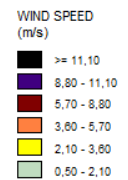
Figure 3. Wind roses based on observations from August 3–9, 2024. From left to right: a. Observation Site 1 (Indonesian Navy Post), b. Observation Site 2 (Umang Island), c. Observation Site 3 (Galaxi Cimanggu Field), d. Observation Site 4 (Kertamukti Field). The images above display the average wind speed and direction across all locations during the observation period. It is evident that wind speeds varied significantly among the four sites, ranging from 2.1 m/s to 8.8 m/s. The figures also reveal that the prevailing wind directions at the four sites were east-southeast, southeast, and south-southeast.
Referring back to the location map (Figure 1), we can see that the wind originated from the land surrounding the observation sites rather than from the ocean, indicating that land-based wind activity was stronger than sea-based wind activity.
What causes land-based winds to be stronger than sea-based winds?
This may be attributed to the dominance of the Australian Monsoon background wind. According to the BMKG (Meteorology, Climatology, and Geophysics Agency), the Australian Monsoon background wind is a seasonal wind blowing from the east (Australia) toward the west (Asia); it exerts a stronger influence than local winds, such as sea and land breezes. Thus, the observation results show a dominance of winds originating from the land, which can be identified as either land breezes or background winds driven by the Australian Monsoon phenomenon.
Does this mean the initial assumption regarding sea breeze activity was incorrect?
Not necessarily. Why is that? Let us look at the following image again.


The image above displays wind speeds and directions at all observation sites between 12:00 and 15:00 WIB on August 6, 2024. The data reveals relatively light winds (speeds ranging from approximately 0.5 to 3.6 m/s), predominantly blowing from directions between south and west. At two specific locations—the Indonesian Navy (TNI AL) Observation Post and Kertamukti Field—winds from the west were dominant, a pattern indicative of a sea breeze phenomenon.
So, did this field study successfully demonstrate the presence of land and sea breezes in the Tanjung Lesung area?
Yes, based on the discussion above, the occurrence of land and sea breezes in the Tanjung Lesung area has been confirmed. Thus, the findings from this field study not only verify the presence of land and sea breezes in Tanjung Lesung but also illustrate how local geographical and atmospheric conditions influence wind movement dynamics.