
Writer : Daffa Tsabat (Meteorologi, 2023)
Editor : Mely Anggrini (Meteorologi, 2022)
Translator : Aisyah Nurdiva Dewary Priatna (Meteorologi, 2024)
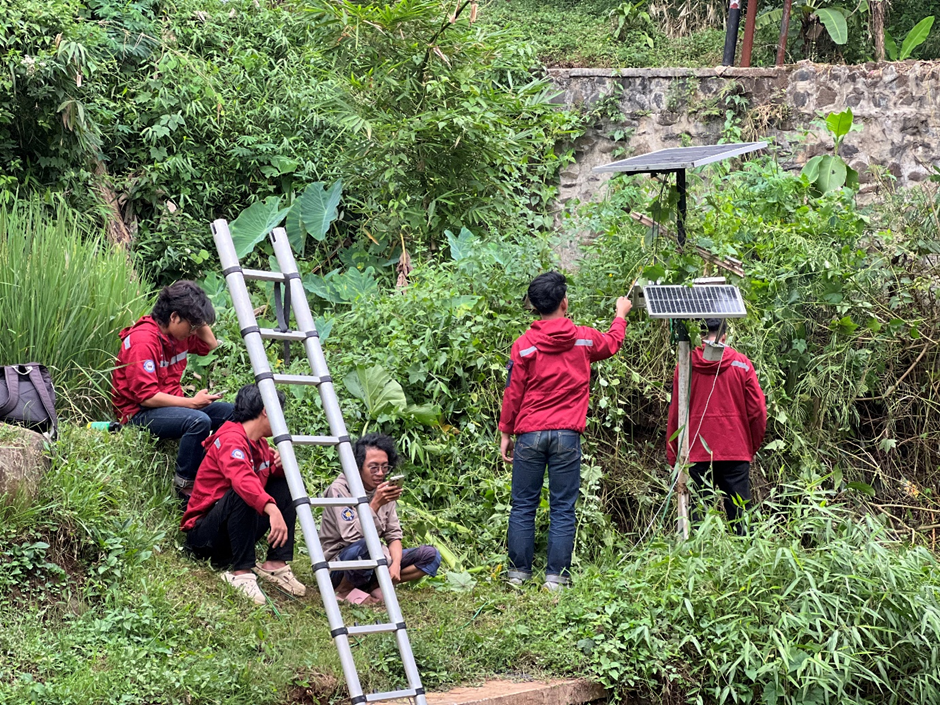
MAJALAYA, meteo.itb.ac.id – BSO Zephyrus HMME “Atmosphaira” ITB conducted a field activity titled “Initial Steps to Strengthen the Flood Monitoring System”. This activity involved surveying sites for the installation of new instruments and performing maintenance on existing flood monitoring equipment in the Majalaya and Paseh Districts of Bandung Regency on Thursday (May 1, 2025) and Tuesday (May 13, 2025).
Initial Survey on Jl. Sanding, Paseh District
On Thursday (May 1, 2025), the Zephyrus team conducted an initial survey at two potential sites for flood monitoring instruments on Jl. Sanding, Paseh District. These locations were selected based on input from the local Community Association (RW) head and representatives from the disaster preparedness community, Jaga Balai. The first site is a flood-prone area that frequently draws complaints from residents due to rapidly rising water levels that cause runoff into downstream areas. The second site was recommended because it is located further upstream than the first. The hope is that installing instruments at both locations will provide earlier warnings, giving residents time to prepare when water discharge surges.
However, the survey encountered challenges regarding difficult terrain and the fact that the land is private property, necessitating a follow-up survey process. Despite this, the team decided to keep both sites under consideration as potential locations while awaiting the permitting process with the landowners.
Instrument Maintenance at the Cibangoak and Ciharus Rivers
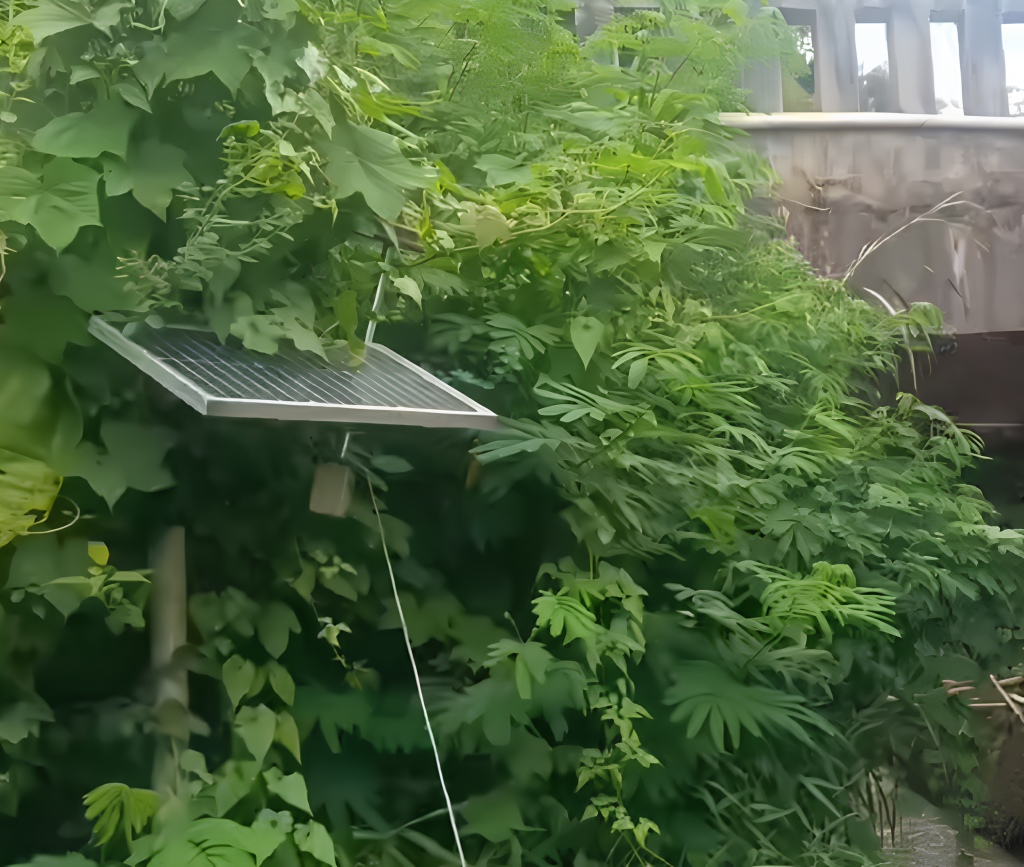
Activities continued on Tuesday (May 13, 2025), focusing on the maintenance of Automatic Rainfall Recorder (ARR) instruments—used to measure rainfall—and Automatic Water Level Recorder (AWLR) units—used to measure river water levels—at two locations: the Cibangoak and Ciharus rivers in Majalaya. At the Cibangoak Intake, the team cleaned solar panels, checked battery voltage, and installed a voltage sensor on the new battery to facilitate real-time power monitoring. Meanwhile, at Sasak Ciharus, the team encountered an issue where a solar panel was not properly connected, causing operational disruptions. Immediate repairs were carried out, including tidying up the wiring and clearing vegetation around the panel to optimize sunlight absorption.
This series of activities highlights the importance of a technology-driven approach to flood monitoring systems. While the ARR and AWLR serve as the primary instruments, the addition of a battery voltage sensor represents an innovative step toward monitoring equipment health online.
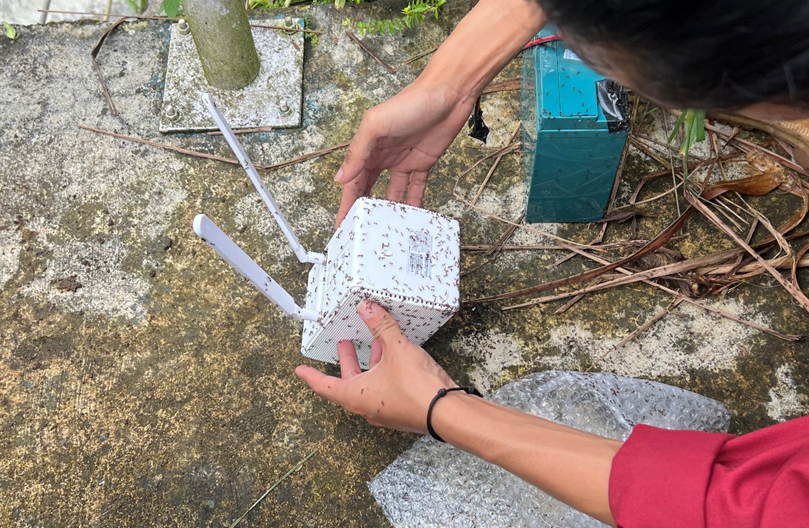
Febri, a member of the Zephyrus Research and Development Division (technology development), explained that the challenges encountered in the field were not solely technical in nature. Difficult terrain, limited access, and environmental factors—such as interference from insects—provided important lessons for the Zephyrus team.
“Equipment issues often stemmed from simple matters, such as interference from ants. This highlights the importance of paying attention to the environment surrounding the instruments,” Febri explained.
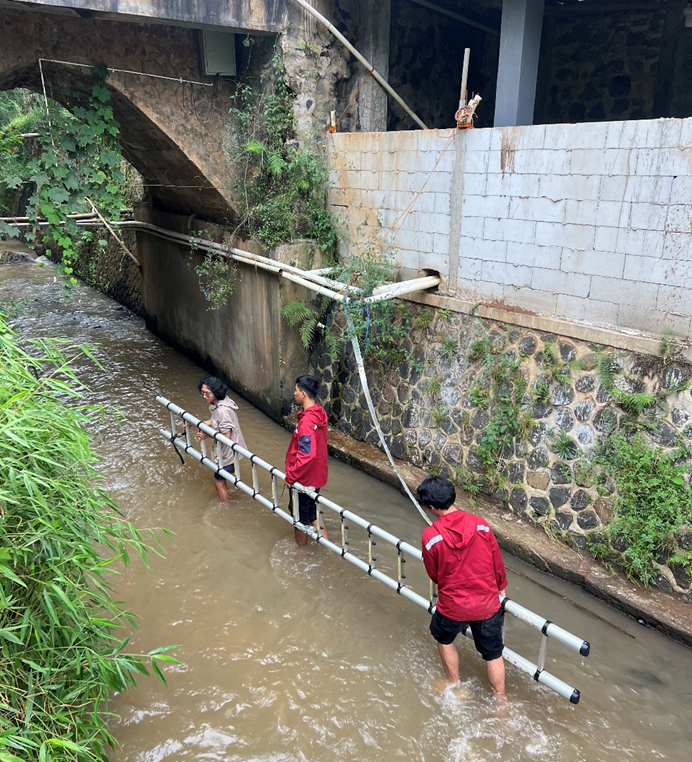
For the Zephyrus team, this activity was more than just a technical task; it marked the beginning of a process of renewal and collective learning. Many new members of the Zephyrus 2025 team gained firsthand experience with field dynamics—ranging from the scorching heat and challenging terrain to the technical procedures and on-site communication.
“It was exhausting and hot, but satisfying. Through this activity, I gained a direct understanding of the site conditions and how the equipment actually functions,” said Gery from the Operations Division.
This activity is expected to serve as a solid foundation for the future development of the Zephyrus flood monitoring system, making it more robust, inclusive, and adaptable to real-world field challenges.