
Reporter : Daffa Tsabat (Meteorology, 2023)
BANDUNG, meteo.itb.ac.id – The Meteorology Study Program at ITB continues to drive innovation in the development of its students’ Final Projects (TA). At the August and October 2025 graduation ceremonies, a new approach in the academic curriculum began to bear tangible results through the Prototype Final Project pathway. Unlike conventional theses that focus on the analysis and research of atmospheric phenomena, this pathway requires students to translate scientific knowledge into technological products that can be directly applied by society.
This strategic step was answered by two graduates, Nafal Shaquille Muhammad and La Ode Muhammad Abin Akbar, who successfully developed an integrated meteorological information system. Beyond their motivation to create a direct impact on society, both chose this pathway as a means to channel their deep interest and talent in programming (coding) and software development.
Data Integration for Disaster Mitigation
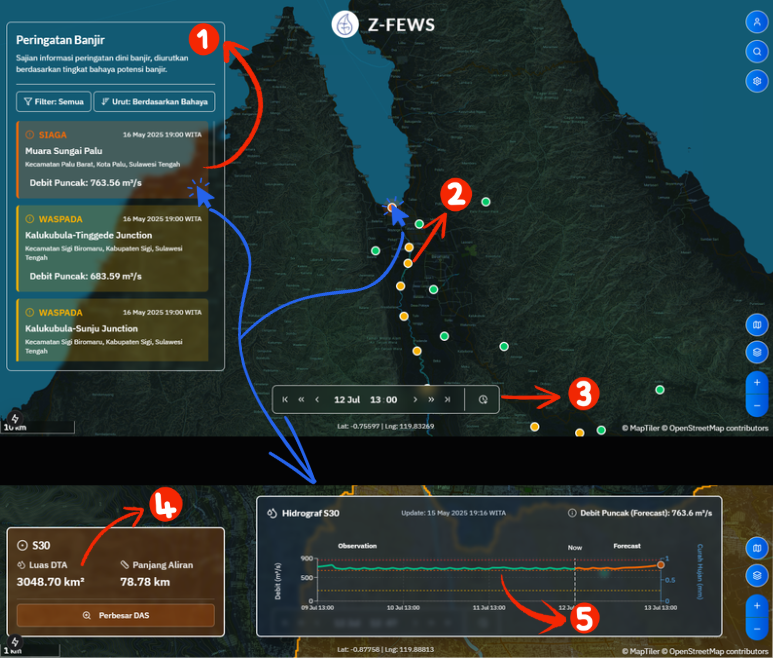
Nafal developed a web-based system called the Zephyr Flood Early Warning System (Z-FEWS). This system is designed as a river flood early warning platform, with a case study on the Palu River.
In its development, Z-FEWS addresses the challenge of disaster information dissemination, which is often scattered across various different platforms. Nafal integrated wind data from the GFS model, cloud cover data from satellites, and radar data from Rain Viewer (BMKG) into a single interactive map display.
“The main function of this website is to disseminate information to the public and local governments regarding the threat of potential flooding. The system displays warning statuses ranging from Safe, Alert, Standby, to Danger, based on water discharge predictions,” said Nafal.
He emphasized the importance of the User Experience (UX) aspect in early warning systems. Information is presented in a centralized manner so that users can quickly understand the level of risk without having to navigate through complex processes.
Computational Challenges of a Real-Time System
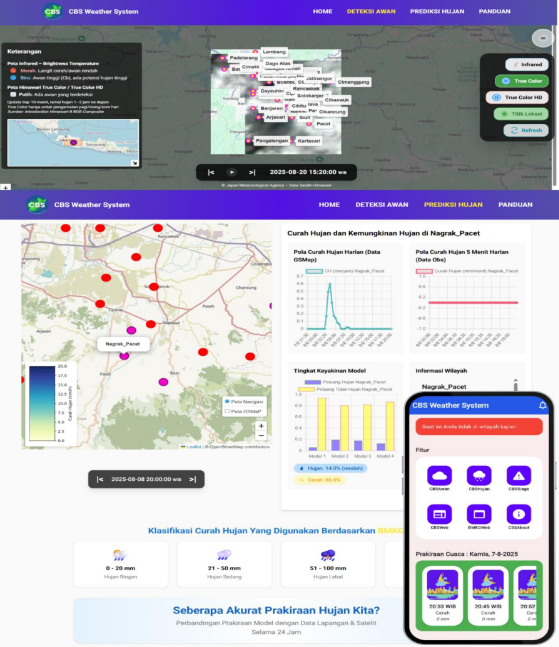
Meanwhile, Abin developed a prototype weather information system based on a mobile application (Android) and a website. The system is designed to resemble BMKG’s operational standards, capable of presenting spatial observation data and time series in real-time with data updates every 10 minutes.
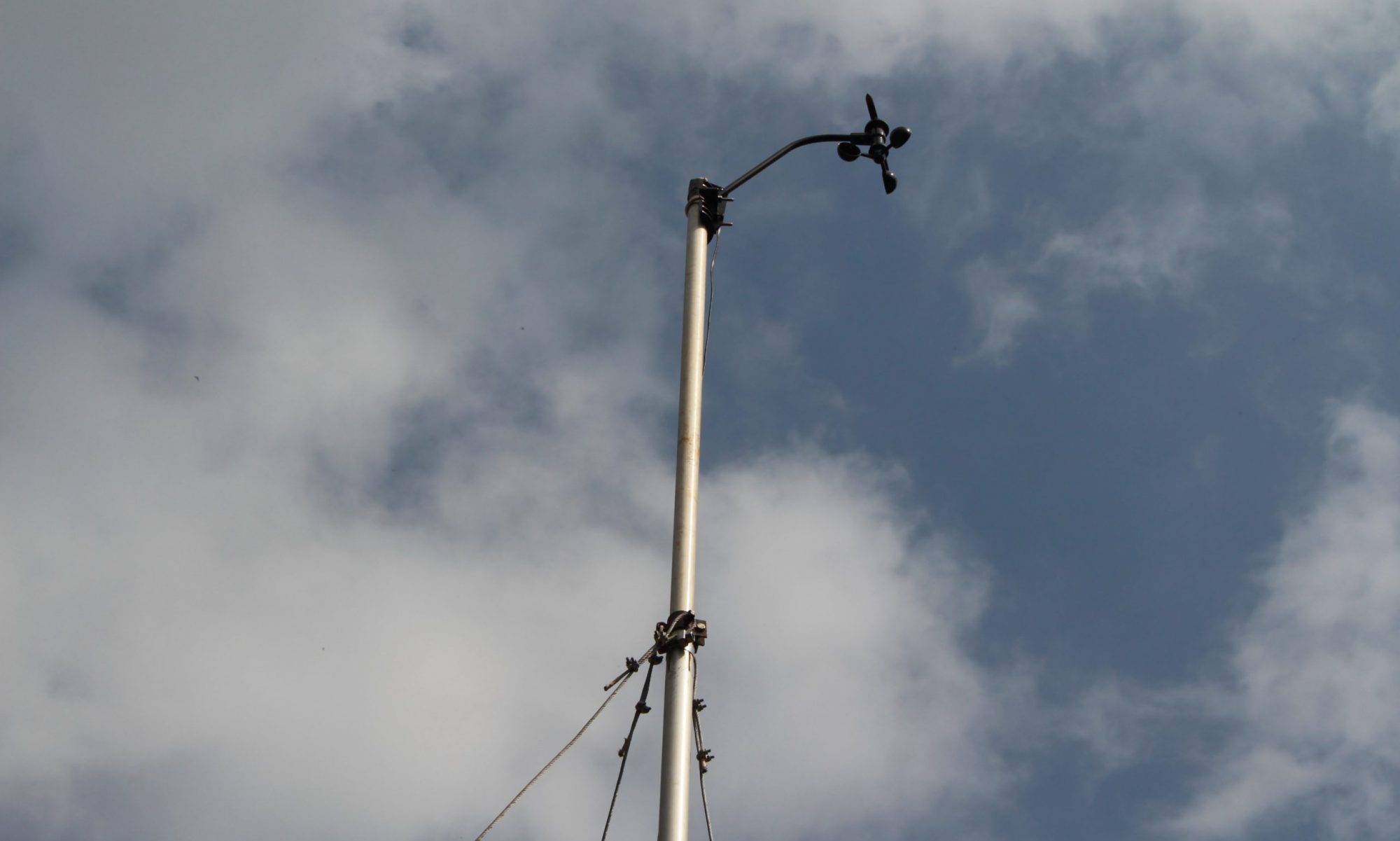
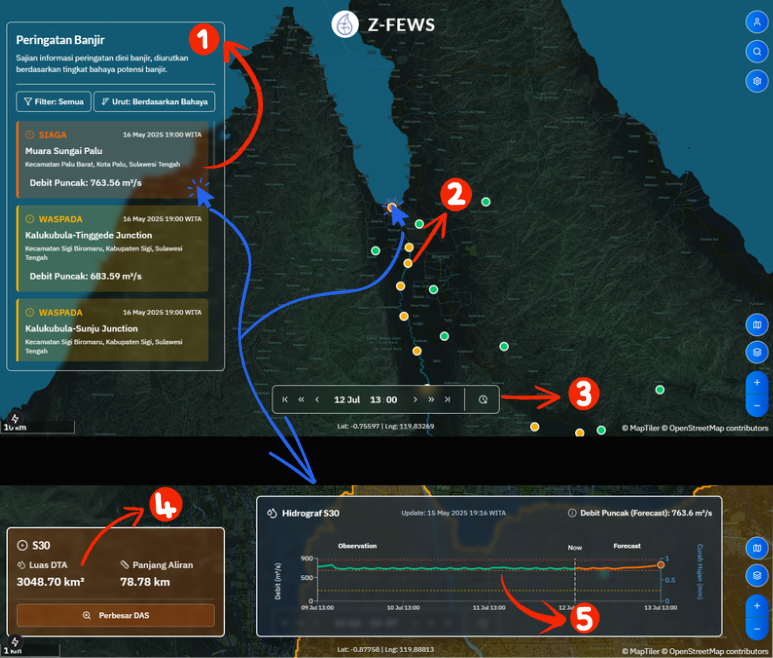
The complexity of this system lies in the processing of massive data. Abin utilized Automatic Weather Station (AWS) data from JagatBalai PUPR at four points within the Bandung Basin, GSMAP data, and Himawari-8/9 satellite imagery for the True Color and Infrared channels.
“The biggest challenge was the machine specifications. Because the information system being developed requires high-level data processing, adequate computing infrastructure is needed to ensure the smooth delivery of information,” explained Abin.
Software Validation and Testing
Despite being in prototype form, the Prototype Final Project still upholds rigorous scientific standards. Validation was carried out in multiple layers. From a meteorological standpoint, model accuracy and spatial analysis were compared against observational data trends from AWS and GSMAP.
From a software engineering standpoint, the graduates applied industry-standard testing methods. Nafal explained that the validation process included Unit Testing to test each code file, Integration Testing to ensure that component workflows ran smoothly, and User Acceptance Testing (UAT) involving end users directly to verify system functionality.
For students interested in taking this pathway, both graduates offered valuable tips. Nafal advised students to conduct in-depth research on User Experience (UX) before beginning to write any code.
“You need to picture what kind of platform you want to build, what your vision is lay it all out first. Research user comfort, then translate that into coding,” said Nafal. He also emphasized the importance of Technical Writing skills in preparing technical documentation and user manuals so that the resulting work can be utilized to its fullest potential.
Abin, on the other hand, stressed the importance of thorough technical preparation. “Prepare adequate computing resources, study machine learning models more extensively, and explore the data you intend to use more deeply,” he concluded.
The presence of the Prototype Final Project pathway in ITB’s Meteorology Study Program marks a multidisciplinary era, in which atmospheric science converges with software engineering. This is expected to produce graduates who are not only proficient in weather analysis, but also adaptive in creating appropriate technological solutions for environmental challenges in Indonesia