Reporter : Daffa Tsabat (Meteorologi, 2023)

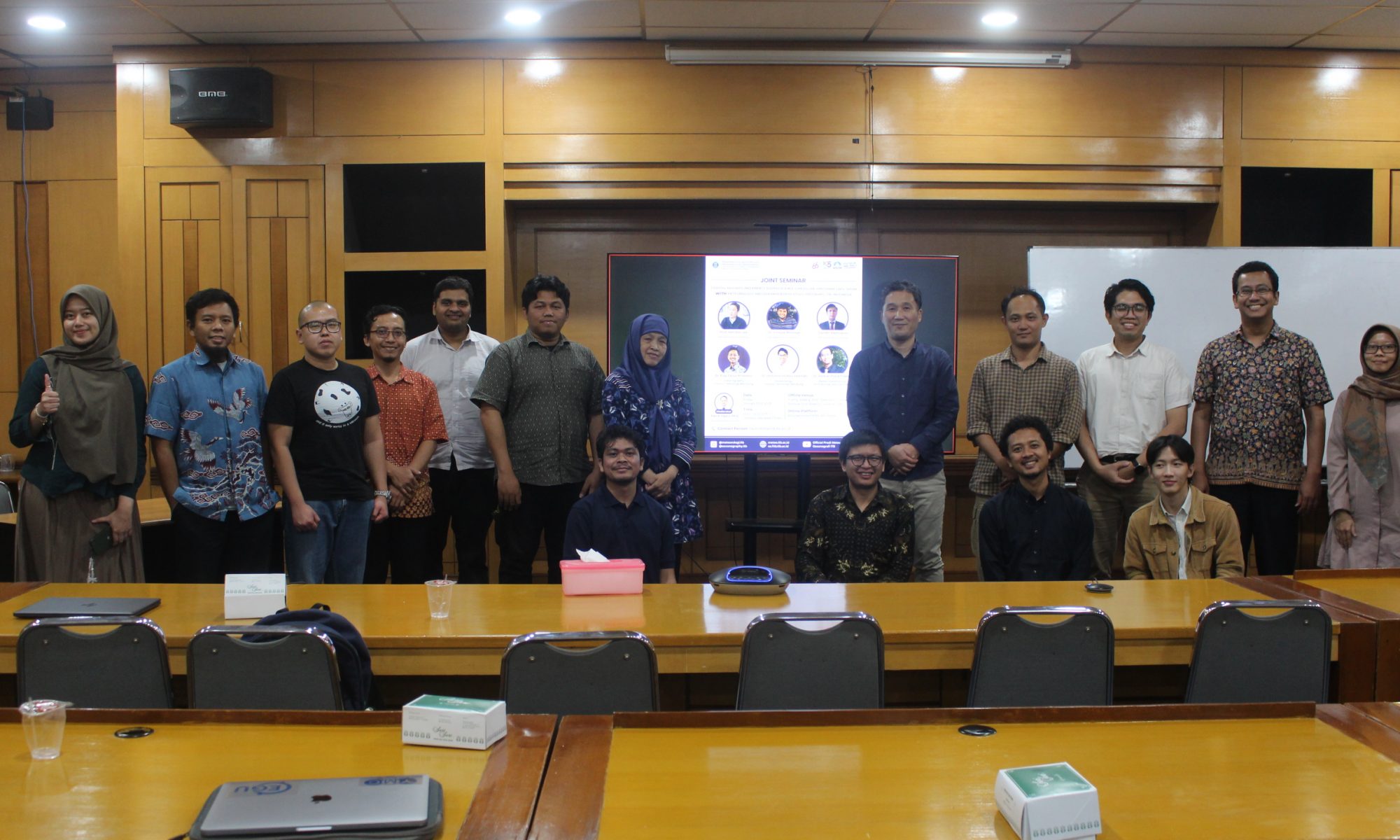
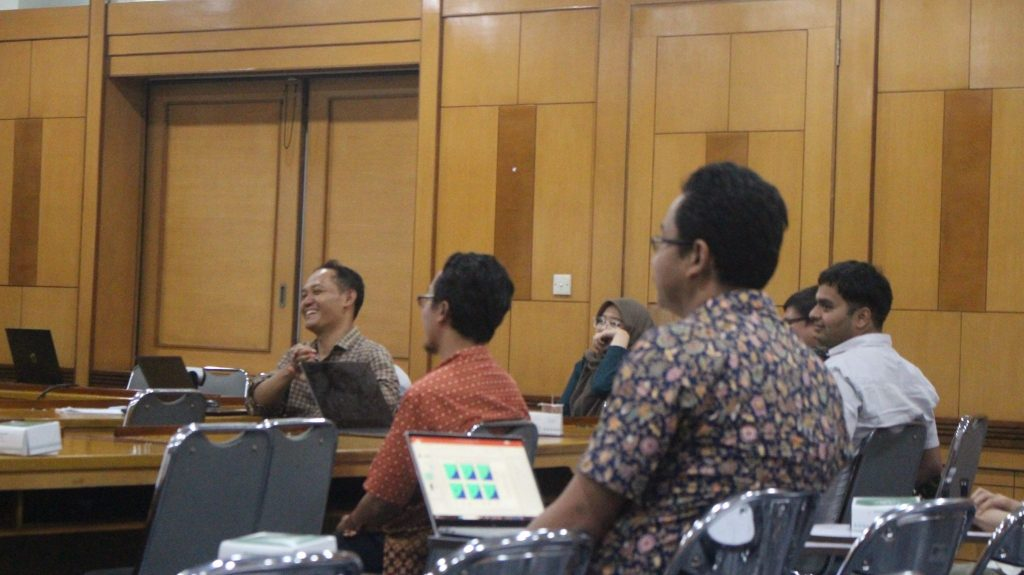
BANDUNG, meteo.itb.ac.id – Research collaboration between Indonesia and Japan was further strengthened through the Joint Seminar: Coastal Hazard and Energy System Science (CHESS) Laboratory, organized by Hiroshima University and the Department of Meteorology and Oceanography ITB, held on Friday (January 30, 2026) at Labtek XI, Institut Teknologi Bandung. The event was conducted both in-person and online, and was attended by lecturers, researchers, and students with interest in a range of issues spanning coastal disasters and energy systems to urban climate dynamics.
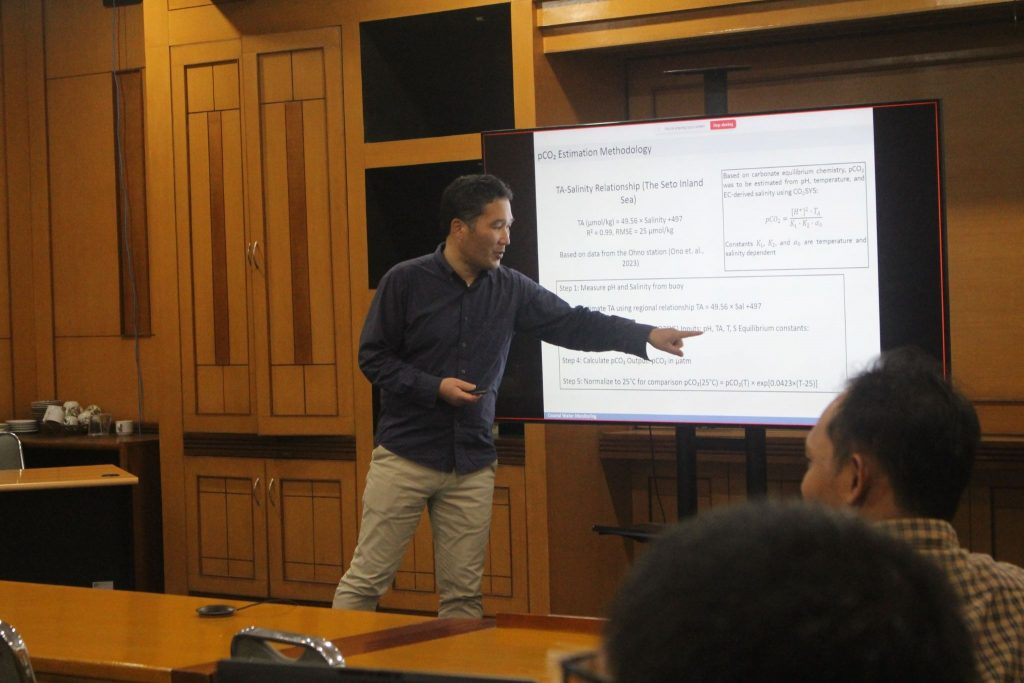
From the very beginning of the session, the atmosphere of discussion felt warm yet remained academic. The seminar was opened with an introduction to CHESS Lab’s research activities by Prof. Han Soo Lee from Hiroshima University. In his presentation, he described how his laboratory evolved from a focus on coastal engineering into a research center that integrates disaster science, renewable energy, and environmental monitoring. The topic of tsunami simulation and its interaction with tidal dynamics became one of the highlights, particularly in the context of developing more accurate hazard maps. The presentation illustrated how numerical approaches extend beyond technical aspects and also have implications for risk mitigation policy.
The discussion then shifted to energy and urban environmental issues. Dr. Vinayak Bhanage presented research on rooftop photovoltaic (solar panel) installation in the city of Sendai, Japan. He emphasized that accelerating the clean energy transition must be understood not only in terms of emission reductions, but also in terms of its impact on urban microclimate conditions. Through high-resolution atmospheric model simulations, his team examined how variations in solar panel coverage can affect surface air temperature and the urban energy balance. This topic sparked considerable interest among participants, given the increasing relevance of decarbonization and sustainable urban development in Indonesia.
Coastal issues resurfaced when Gandhi Napitupulu presented the use of satellite imagery and artificial intelligence to map seagrass habitats in Japanese waters. This remote sensing-based approach enables more efficient and sustainable monitoring of coastal ecosystems. Seagrass, as part of the blue carbon ecosystem, is recognized as playing an important role in carbon sequestration, making this research a bridge between oceanography, spatial technology, and global climate change issues.
(Doc. Committee)
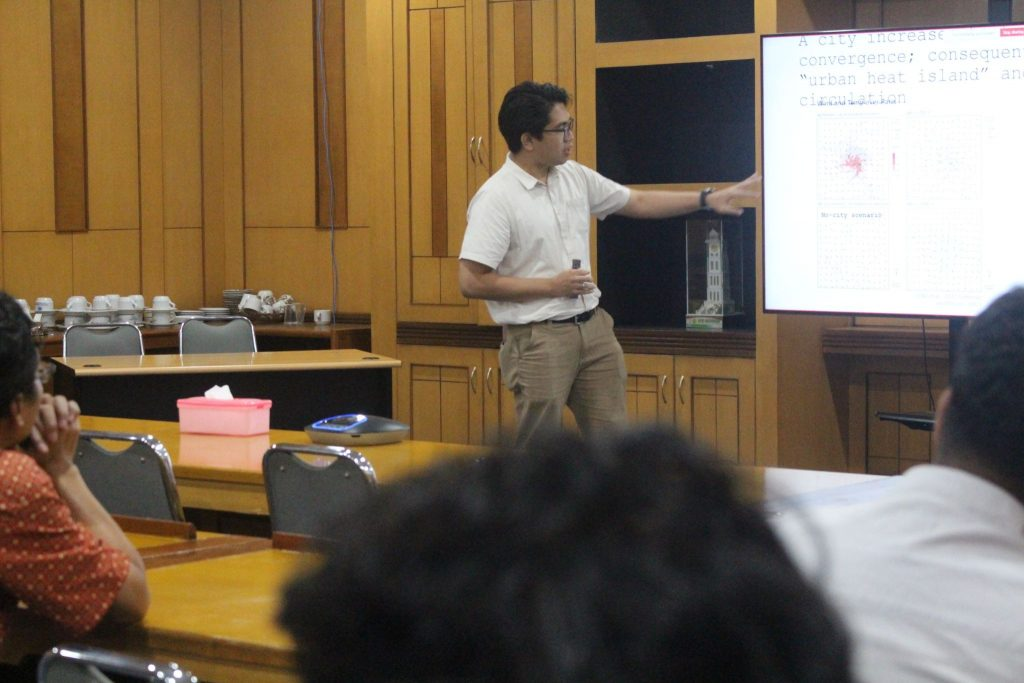
From ITB’s side, Dr. Eng. Faruq Khadami introduced various oceanographic research activities conducted along Indonesia’s coastal areas, including studies on water dynamics and the environmental characteristics of tropical marine settings. Meanwhile, Dr. Muhammad Rais Abdillah discussed simulations of the impact of urbanization and global warming on the urban heat island phenomenon in the Nusantara Capital City (IKN). The research emphasized the importance of a climate science-based approach to future urban planning, particularly in addressing rising temperatures and land use changes.
The seminar was then closed by Dr. Radyan Putra Pradana from BMKG, who highlighted the role of High Performance Computing (HPC) in supporting high-resolution atmospheric and climate research. He stressed that adequate computational capacity serves as a critical foundation for running the complex simulations needed for planning and risk mitigation in both urban and coastal areas.
Over the course of more than three hours, discussions proceeded interactively with a number of questions from the attending participants. The exchange of ideas that took place demonstrated that the challenges of disaster management, energy transition, and climate change cannot be addressed in a sectoral manner. Cross-disciplinary collaboration is required, as was reflected throughout this seminar.
Through this event, the Meteorology and Oceanography Study Program at ITB together with CHESS Lab Hiroshima University not only shared research findings, but also opened broader avenues for future cooperation. This seminar served as a reminder that science, when brought together in an open forum for dialogue, can serve as a bridge to address increasingly complex global challenges.