By: Lutfiah Nur Rohmah Salaamah
Translator: Aisyah Nurdiva Dewary Priatna
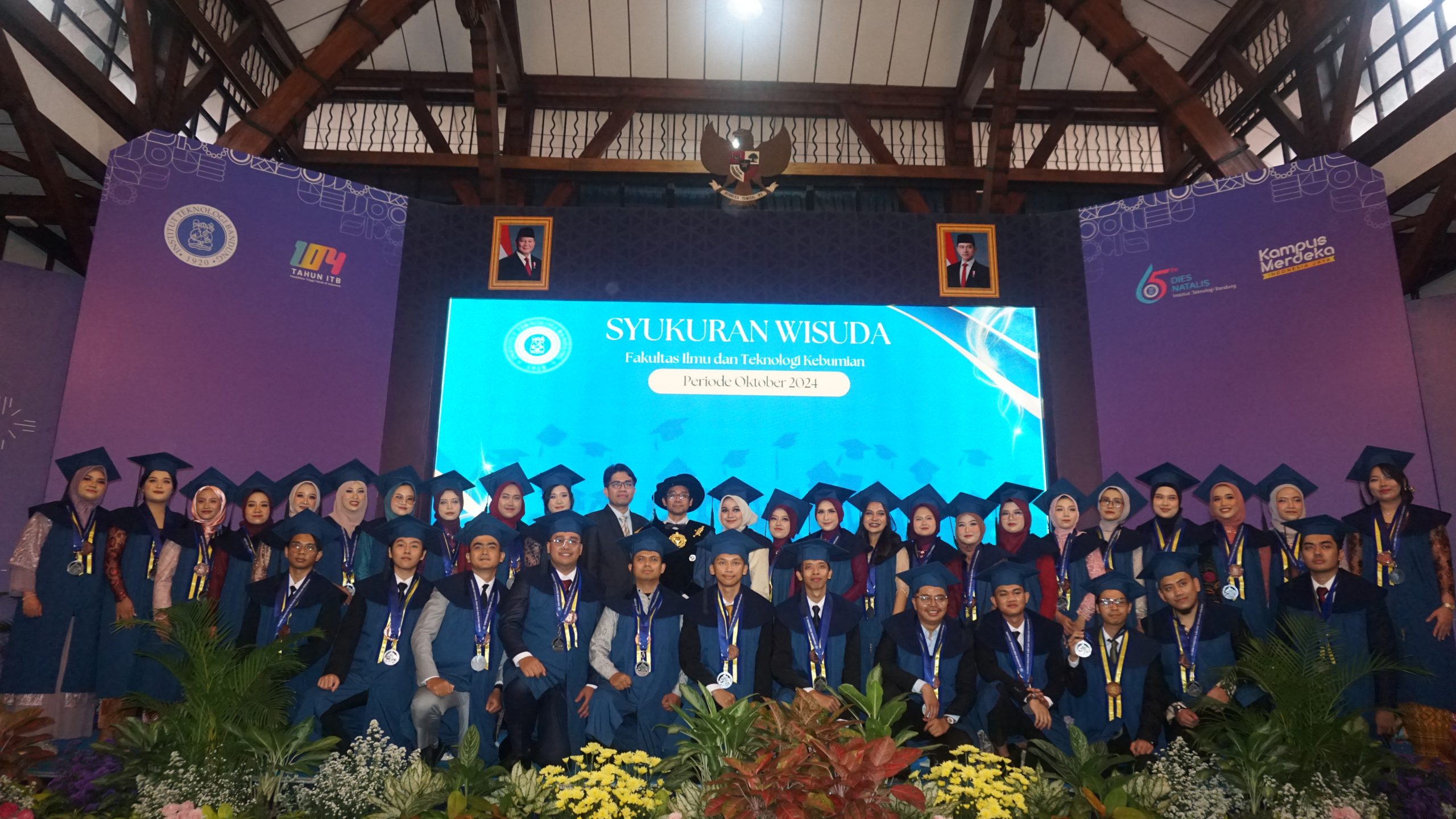
Congratulations and best wishes to the 37 ITB Meteorology graduates at the October 2024 graduation ceremony.
Welcome to our website ~ Fly, flying higher, to reach the sky. See everything and seek knowledge then you will understand her.
By: Lutfiah Nur Rohmah Salaamah
Translator: Aisyah Nurdiva Dewary Priatna
By : Mely Anggrini
Saturday, October 26th 2024

BANDUNG, meteo.itb.ac.id – The Meteorology Study Program at the Bandung Institute of Technology (ITB) conducted research on dynamic thermal comfort in Indonesia in collaboration with the Varquez Laboratory (Department of Transdisciplinary Science and Engineering, Tokyo Institute of Technology) on September 19–20, 2024.
The initiative comprised a series of events, ranging from research discussions and experiments to a special lecture. Carried out in partnership with ITB’s Analysis Laboratory and Applied Meteorology Laboratory, the activity aimed to improve thermal comfort indices by accounting for dynamic environments from the perspective of human movement.

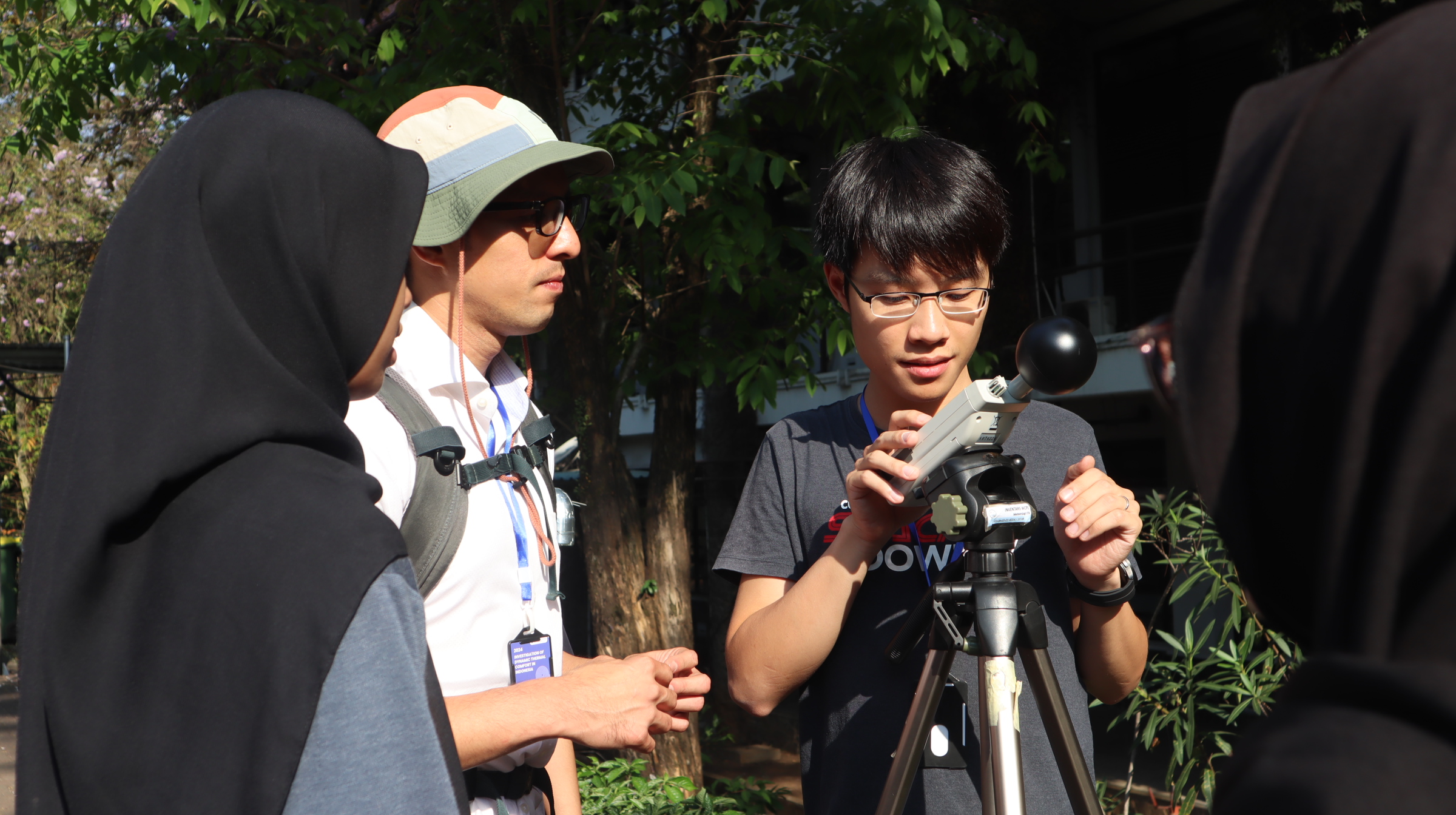
Special lectures were led by Dr. Alvin C. G. Varquez, focusing on urban climate, and Dr. Do Ngoc Khanh, focusing on urbanization and thermal comfort. Beyond the engaging presentations, the session also featured experiments conducted by Dr. Do Ngoc Khanh, Mr. Ryoga Hiroki, and Ms. Xiao Jin.
This research, titled “Enhancing Dynamic Thermal Comfort,” aimed to assess thermal comfort at the individual level. The experiments utilized two types of equipment: a jacket equipped with fans and thermal comfort sensors attached to various points on the body, including the legs, fingers, and arms.
“Before the equipment was attached, we were asked about the clothing and materials we were wearing. This was done to establish a baseline for each individual’s comfort level prior to the experiment,” said Windi, one of the participants.

Participants will engage in discussions about their sensations after experiencing two conditions: remaining stationary indoors and moving outdoors. This experiment offers participants a new perspective on individual thermal comfort.
“I was interested in participating in this experiment because it looked fun, and I was curious about the equipment being used. It turned out to be a really exciting experience,” said Serra.
Through this activity, students are expected to gain a better understanding of the thermal environment from the perspective of human comfort, helping to mitigate heat-related risks associated with climate change and urbanization.

By : Mely Anggrini
Monday, September 30th 2024

BANDUNG, meteo.itb.ac.id – The Faculty of Earth Sciences and Technology at Institut Teknologi Bandung (FITB ITB) has once again organized the International Seminar on Earth Sciences and Technology (ISEST), marking its third edition. ISEST serves as an international platform for sharing knowledge, exchanging ideas, and fostering collaboration in earth science and technology research.
Dr. Eng. I Dewa Gede Agung Junnaedhi, a lecturer in the Meteorology Study Program and the organizing chair of the third ISEST, noted that this year’s seminar is proceeding under much better conditions compared to previous years, which were held in fully online or hybrid formats.
The theme for this third ISEST is “Navigating the Changing World Through Earth Sciences and Technology.” This theme emphasizes an adaptive approach to earth-related issues, ranging from natural resource utilization to natural disaster management.
“The main theme is divided into four topics: Solid Earth Sciences, Ocean Sciences, Atmospheric Sciences, and Interdisciplinary Earth Science and Technology,” said Dr. Junnaedhi.
While the majority of presenters are from Indonesia, ISEST also features presenters from various other countries, including Japan, Taiwan, the United Kingdom, South Korea, and the United Arab Emirates. “The presentations will be organized into two plenary sessions, two special sessions, and sixteen parallel sessions,” Dr. Junnaedhi added.
Continuing the tradition of previous ISEST events, most papers presented at the seminar will be submitted to the IOP Conference Series: Earth and Environmental Science proceedings. It is hoped that this publication will provide greater exposure for the research presented at ISEST 2024.
In his closing remarks, Dr. Junnaedhi expressed hope that this third ISEST would serve as a venue for participants to engage in productive discussions, build research networks, and initiate new collaborations, particularly within the field of earth science and technology.

By : Mely Anggrini (Meteorologi, 2022)
Tuesday, September 3rd 2024

BANDUNG, meteo.itb.ac.id – The Meteorology Study Program at the Bandung Institute of Technology (ITB) held an introductory meeting with all active students on August 27–28, 2024, at the Study Program Seminar Room, Labtek XI, ITB Ganesha Campus.
The first day’s session, led by the Head of the ITB Meteorology Study Program, Dr. Muhammad Rais Abdillah, S.Si., M.Sc., began with a welcome address and an overview of the facilities and infrastructure provided by the program. Additionally, Dr. Rais introduced the faculty members and their respective areas of expertise within the study program.
Dr. Rais provided a detailed explanation regarding the transition from the 2019 Curriculum to the 2024 Curriculum, which is being implemented starting in the odd semester of 2024. It was announced that, under these changes, meteorology students would have the option to choose from four distinct learning tracks beginning in the 2024 academic year.

These schemes include the general scheme, the specialization scheme, the cross-program integration scheme, and the MBKM scheme. The general scheme is the standard pathway for completing the undergraduate program, wherein students independently utilize their free elective course (MKPB) credits while adhering to regulations established by the Meteorology Study Program and the Bandung Institute of Technology (ITB).
The specialization scheme is a specialized pathway for completing the undergraduate program, offering students the opportunity to deepen their knowledge in specific fields by selecting specialization packages provided by the study program as part of their free elective courses. These specialization packages are organized into eight areas: Atmospheric Science; Renewable Energy; Hydrometeorological and Environmental Disasters; Climate Change; Meteorological Technology and Instrumentation; Operational Meteorology; Meteorological Data Science; and Weather and Climate Prediction.
The next category is the cross-program integration scheme, which comprises two options: the major-minor scheme and the double major scheme. The major-minor scheme is an inter-program arrangement for undergraduates, allowing students in a primary study program (the major) to use a portion of their free elective credits to complete a minor package offered by another study program. The second option is the double major scheme, which enables students to designate their current study program as their first major and subsequently pursue a second major package from a different study program.
The final option is the Merdeka Belajar Kampus Merdeka (MBKM)—or “Freedom to Learn, Independent Campus”—scheme. This specialized pathway allows students to fulfill their free elective course (MKPB) requirements by participating in various activities outside their study program or off-campus. These activities may be initiated by external parties, such as the business and industrial sectors, research institutions, government agencies, other domestic or international universities, and other entities.
In addition to these new pathways for completing the undergraduate program, there have also been updates regarding the Final Project (TA) requirements for final-year students in the ITB Meteorology Study Program. The final project may take the form of research, a project, or a prototype. Students may choose between two tracks: the first involves on-campus study—specifically a literature review related to the project topic—while the second entails a practical internship at an institution or company.
The new 2024 curriculum for the Meteorology Study Program is expected to provide better guidance for the program’s implementation, ultimately producing top-tier graduates in the field of meteorology—both within Indonesia and on the global stage.